
What 20 Years and Thousands of Client Conversations Taught Me About Financial Advice
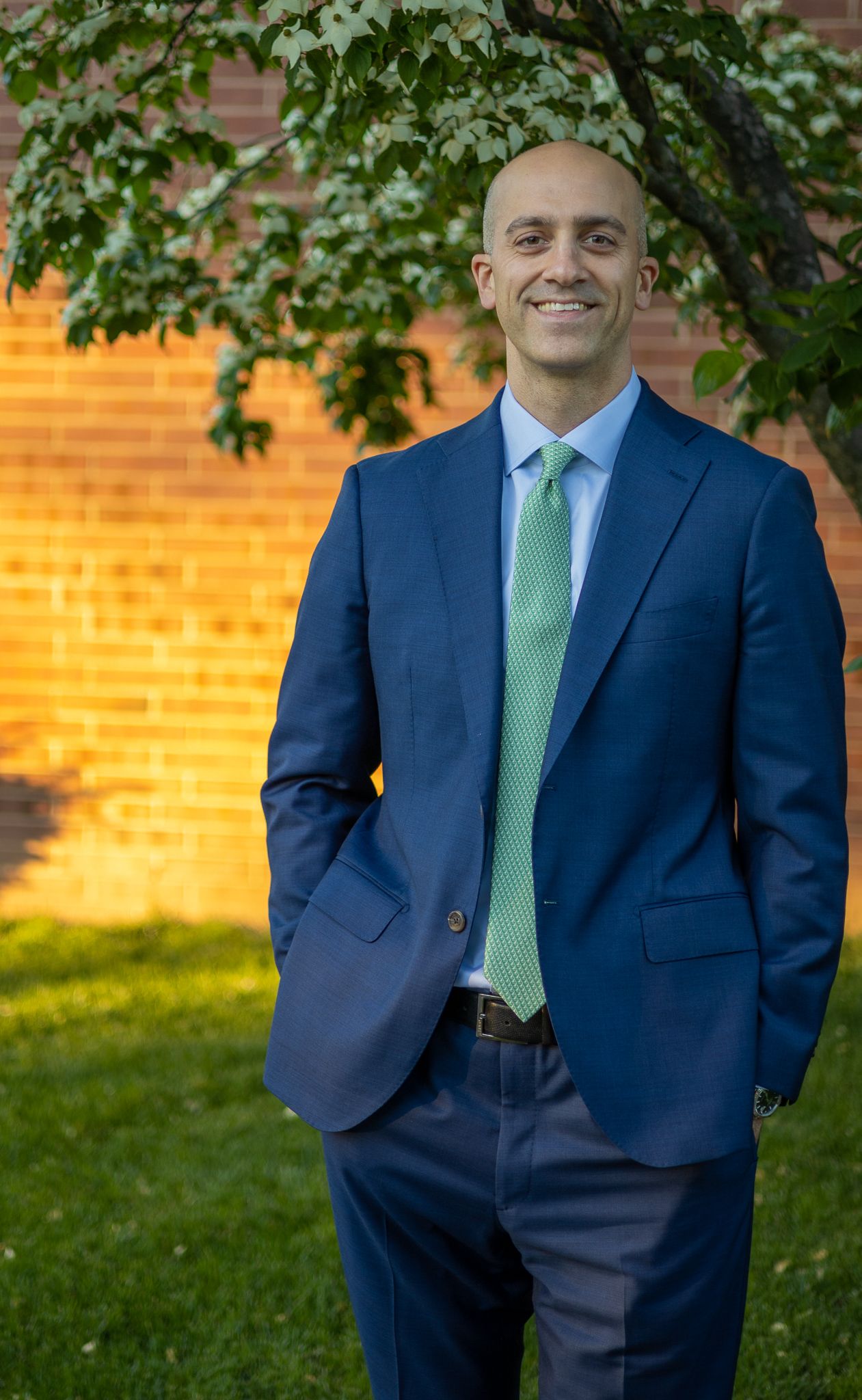
By Nick Stevens, CFP® — Founder of Evergreen Wealth Management, a flat-fee, fee-only fiduciary firm in Boston serving clients nationwide
I’ve been a financial advisor for 20 years. In that time, I’ve worked in three very different environments — a small private wealth management firm in Florida, Fidelity Investments in Boston, and now my own boutique practice. Each one taught me something fundamentally different about this industry, about the people in it, and about what financial advice actually looks like when you strip away the marketing.
This is the stuff that doesn’t make it into the pitch meeting. The things I’ve seen, the patterns I’ve noticed, and the conclusions I’ve drawn from sitting across the table from thousands of investors — each with their own story, their own fears, and their own version of “I just want to make sure I’ll be OK.”
The education they don’t tell you about
I started in this industry knowing nothing. I was a college senior who’d landed an internship at a small, private wealth management firm in Florida. I didn’t understand markets. I didn’t understand financial planning. I didn’t even fully understand what a financial advisor did day-to-day.
What I did have was extraordinary luck. A senior advisor at the firm — an experienced financial planner who’d been doing this for decades — took me under her wing. She let me sit in on client meetings. She walked me through how she prepared for each one — reviewing the portfolio, anticipating questions, thinking through what had changed in the client’s life since the last meeting. She let me watch how she navigated difficult conversations — the ones about spending too much, about unrealistic expectations, about the gap between what a client wanted to hear and what they needed to hear.
That mentorship was the foundation of everything I’ve done since. Without it, I would have spent my early career doing what most young advisors at small firms do: spending almost all of my time trying to find clients, and almost none of my time actually learning how to serve them.
What most young advisors actually do all day
Here’s something most people don’t realize about the advisory industry: at many firms — especially smaller and mid-size ones — new advisors spend the vast majority of their time on sales and prospecting. Not financial planning. Not investment analysis. Not deepening their expertise. Sales.
During my three years at that first firm, I spent roughly half my time doing exactly this. I drove around the state of Florida, walking into businesses cold — any business, any door — introducing myself, trying to start a conversation, hoping someone might need financial help. I made cold calls. I attended networking events. I did everything the industry tells young advisors to do to build a book of business.
It was grueling, humbling work. And it taught me something important: the skills required to acquire clients are completely different from the skills required to serve them well.
The advisors who are best at getting in the door — the ones with the firmest handshake, the smoothest pitch, the most natural charisma — aren’t necessarily the ones who are best at analyzing a tax return, modeling a Roth conversion strategy, or building a withdrawal plan that will hold up over a 30-year retirement. Those are different skill sets. But at most firms, the ability to bring in new business is what gets rewarded and what determines how quickly you advance.
I was lucky. Because of my mentor, I spent the other half of my time in real client meetings, watching a skilled advisor do the actual work. I saw how she prepared. I saw how she listened. I saw how she delivered advice that was sometimes unwelcome but always honest. That split — half prospecting, half learning — gave me a foundation that many young advisors never get.
Some advisors are 5 or 10 years into their careers and have spent the overwhelming majority of that time in pitch meetings, prospect calls, and networking events. They’ve become experts at the first few conversations — building rapport, establishing trust, delivering a compelling presentation. But they’ve had far less experience doing the deep, ongoing planning work that clients actually need. They know how to win the business. They haven’t had enough reps to know what to do with it.
This is something worth asking about when you’re interviewing advisors. Not just “how many years of experience do you have?” but “how much of that experience was spent actually doing financial planning and investment management for clients — versus prospecting and building your practice?”
What changed everything: Fidelity and the power of repetition
After three years at the small firm, I moved to Fidelity Investments. It was a completely different world.
In my very first interview, the hiring manager said something I’ll never forget: “You will never have to make a single cold call here.”
If you’ve never worked at a firm where business development consumes half your waking hours, you can’t fully appreciate what those words meant. No more driving around knocking on doors. No more cold calls to strangers. No more spending 80% of my energy convincing people to have a conversation and 20% actually having it.
Fidelity has millions of existing clients. They didn’t need me to find people — they needed me to help the people who were already there. From day one, I had a client base. Sometimes they came to me through Fidelity’s internal systems. Sometimes I reached out to existing customers to offer assistance. But the dynamic was fundamentally different: people already trusted the brand. When I called, they picked up. When I offered to review their financial situation, they said yes. The wall of skepticism that dominates the first 30 minutes of every cold meeting — “who are you, why should I trust you, what are you trying to sell me?” — was gone. I could skip straight to the work.
And the work was extraordinary. I was having 3 to 6 client meetings per day. Not prospect pitches — real meetings with real people about real financial decisions getting right to business and having real discussions about their needs. Over 12 years, my book of business grew to roughly 450 client relationships. I sat across the table from thousands of investors, each with a different story, a different set of concerns, and a different relationship with money.
The sheer volume of those conversations taught me things that no certification, no textbook, and no amount of individual study could have. There are patterns in human financial behavior that only become visible after thousands of data points. And once you see them, you can’t unsee them.
What thousands of client conversations actually teach you
When you’ve had as many financial conversations as I’ve had, you stop hearing the words people say and start hearing the patterns underneath them.
I spent years at Fidelity managing hundreds of client relationships at a time. Not a dozen. Not fifty. Hundreds — simultaneously, across every market environment you can think of. Bull markets, bear markets, COVID, rate hikes, flash crashes. When you go through that many planning reviews, that many phone calls where someone is either elated or terrified, you start noticing things that only show up at scale.
Here’s what all those at-bats actually taught me.
People often change their minds
In my first few years, I took clients at their word when they described their plans. “I’m going to retire at 62.” “I’m going to downsize the house.” “I’m going to cut my spending by 20% in retirement.” “I’m not going to panic when the market drops.”
Over time, I noticed how often the plan and the reality diverge. The client who says they’ll retire at 62 often works until 65 because they’re not emotionally ready. The one who says they’ll downsize can’t bring themselves to leave the house where they raised their kids. The one who swears they won’t panic sells everything in a downturn because the abstract concept of “staying the course” feels very different when your portfolio is down $400,000.
This is a big part of why I automate everything I possibly can. Rebalancing, contributions, tax-loss harvesting triggers, distribution schedules — if there’s a way to take the decision out of human hands at the moment of maximum emotion, I build the system that way. Not because clients aren’t smart. They are. But I’ve watched enough smart people override their own good plans to know that the ones with automated systems in place tend to come through better.
A good financial plan accounts for this gap between intention and action. It builds in buffers, models the “what if I don’t actually do what I say I’m going to do” scenarios, and creates guardrails that keep things on track even when emotions are running high.
The couple that surprises you
One common pattern I’ve seen is the husband and wife where one partner identifies as the aggressive investor and the other as the conservative one.
They’ll sit across from you and the dynamic is always clear. One of them wants more equities, thinks they can handle volatility, is comfortable with risk. The other wants more bonds, sleeps better with a bigger cash cushion, doesn’t want to look at statements in a down market.
Then the market actually drops 20%.
Often times, the one who told you they were comfortable with risk is the one calling in a panic wanting to sell everything. The one who described themselves as conservative? They’re the steady hand saying, “We planned for this. Let’s stick with what we agreed to.”
It works in the other direction too. During up markets, clients see the returns they could have had if they’d been more aggressive, and that regret quietly shifts how much risk they want to take going forward. They come into the next review wanting to increase their equity exposure — not because anything changed about their goals or their timeline, but because it’s painful to feel like you left money on the table. And then that increased exposure is exactly what hurts them when the market eventually turns.
Balancing these two regrets — wishing you had more in the market during the good years, wishing you had less during the bad ones — is not a new problem. It’s one of the oldest dynamics in investor psychology. But the last 17 years or so have made it especially acute. We’ve lived through one of the strongest stretches for equity markets in modern history, and a lot of investors are looking back with the hindsight of wishing they’d been even more aggressive. That’s understandable. But if you’re approaching retirement now, the relevant question isn’t what worked over the last 17 years — it’s what’s appropriate for you going forward. And we can be reasonably confident that the next 17 years in the markets probably won’t look like the last 17.
The truth is, there’s really no way to know someone’s true risk tolerance by talking about down markets during an up market. It’s an abstract conversation until it isn’t. So rather than start with “how much risk are you comfortable with,” I start with what we know your money actually needs to do for you. What are your income needs? When do you need to start drawing from the portfolio? What’s the floor below which your plan stops working? Those answers take certain asset allocations off the table before we even get to preferences.
From there, I’ll typically present two or three options for how to invest the remaining funds and walk through the tradeoffs of each — more growth potential but more volatility, more stability but less upside, or something in between. We combine that conversation with a risk tolerance questionnaire that every client goes through — if you’re curious, you can try it yourself here — and between the two, we get to an asset mix that makes sense for a given household.
But none of it is perfect. It’s never a finished product. I pay attention to body language as much as answers — the person who goes quiet when you say “your portfolio could be down $180,000 for six months” is telling you something important regardless of which box they checked on the form. And we always leave room to adjust over time as markets shift, life changes, and people learn things about themselves that no questionnaire was going to surface upfront.
What people ask for and what they actually need
A new client almost always comes in wanting to talk about their portfolio. “Is my allocation right?” “What do you think about this stock?” “Should I be in more bonds?” Those are the questions they’ve prepared, and they’re perfectly reasonable.
But those questions are usually the door, not the room. Six months into the relationship, the real conversations start. When can I actually retire? My mom is starting to need help and I don’t know how to pay for it. Should we help our daughter with a down payment or is that going to wreck our own plan? I think we’re fine, but I wake up at 3 AM worried that we’re not.
The question underneath every investment question is almost always the same: Am I going to be OK?
It’s not that people don’t know what they need — it’s that the thing that’s actually worrying you is hard to articulate when it’s tangled up in money and family and identity. Part of the job is just creating enough room in the conversation that we get past the surface question to the real one.
The value of having someone on your team
One of the things I’ve come to believe after 20 years in this industry is that the most underrated part of working with a financial advisor isn’t the investment strategy or the tax plan — it’s just having someone on your team who knows your situation and whose advice you trust to be coming from a good place. When a question is asked, there’s a lot of value in knowing the answer received is the advisors best advice and no other incentives at play.
But that second part matters more than people realize. Under the traditional AUM model, your advisor’s compensation is directly tied to how much money they manage for you. That creates subtle incentive problems that most clients never think about. If you’re considering selling a rental property and investing the proceeds, your AUM advisor gets a pay raise. If you want to pull $400,000 out of your managed accounts to pay off your mortgage — which might be the right move for you — your advisor takes a pay cut. If you’re thinking about gifting a large sum to your kids or funding a 529 plan outside the managed portfolio, the advice you’re getting is coming from someone whose income decreases if you follow through.
Most advisors are good people who try to give honest advice regardless of how it affects their compensation. But the structure matters. When the incentive is baked into the fee model, it’s always in the room — even if nobody mentions it.
At Evergreen, my incentive is simple: keep you as a client for the long haul. That’s it. I get paid the same flat fee whether your portfolio is $500,000 or $5 million, whether you add money or take it out, whether you sell a property or buy one. There’s no scenario where my advice is colored by how it affects my revenue, because it doesn’t.
What that means in practice is that when something changes in your life — a job offer, an inheritance, a health scare, a kid who needs help, a market that has you second-guessing your plan — you have someone to call who already knows your full picture. You’re not starting from scratch with a stranger. You’re not Googling at midnight trying to figure it out on your own. You’re picking up the phone or sending a quick email to someone who’s been onboarded into your financial life and can help you think through it.
Will my advice always be the absolute best advice you could theoretically get from any advisor on the planet? Probably not — nobody’s is. But you’ll know it’s coming from someone who has no reason to steer you in any direction other than the one that’s right for you. And that peace of mind — knowing the advice is clean — is worth more than most people appreciate until they’ve experienced it.
The fee discussion
Over thousands of conversations, I’ve watched how people react when fees come up — and it can be a sensitive part of any advisory relationship. But it doesn’t have to be.
Here’s a scenario that plays out across the industry every day. A client is sitting in an index fund paying very little in fees — maybe a few basis points. An advisor proposes moving to a managed wealth management program that charges roughly 1% per year. The advisor discloses the fee — they’re required to — and quotes it as a percentage. One percent. It sounds small. And unless the client specifically asks “what does that actually cost me in dollars?” the dollar figure doesn’t always come up on its own.
I want to be clear: I’m not suggesting this is how every advisor handles it, and different firms and different advisors approach the fee conversation in different ways. But in my experience, the percentage framing can make it easy for clients to move forward without fully registering the real cost. One percent of a $2 million portfolio is $20,000 a year. That’s a number worth seeing, and worth sitting with, before you agree to pay it.
Sometimes the conversation moves quickly from fees to projected returns — if the market does 8% and you’re paying 1%, you’re still netting 7%, and here’s what that looks like in dollars. That math isn’t wrong. But it frames the fee as a small slice of a positive outcome, which is a different conversation than asking whether the fee is the right price for the service being provided regardless of what the market does. The market return isn’t something your advisor generated. The planning, the advice, the ongoing relationship — that’s the service. And that’s what the fee should be measured against.
Some clients genuinely don’t care what they pay. They want the problem handled, they trust their advisor, and the fee is a non-issue. That’s a perfectly valid position, and there’s nothing wrong with it.
Some clients are fee-conscious from the start — they’ve done the math, they know what 1% means in real dollars, and they’re looking for a better alignment between cost and value. These are often the most financially sophisticated people in the room. They’re not cheap. They’re just paying attention.
And then there’s a group I’ve seen more than any other: clients who know their fees are high — or sense that they are — but don’t fully understand why, and don’t feel equipped to do anything about it. They genuinely like their advisor. The relationship feels good. But when they look at their statements and try to reconcile what they’re paying with what they’re getting, the math doesn’t quite add up and they can’t put their finger on why.
These clients don’t bring it up. Not because they’ve decided the fee is fair, but because they don’t want the confrontation. They don’t know any other advisors. They don’t know what the alternatives look like. And the fear of raising the issue — or worse, leaving and then needing to come back — feels like a bigger risk than just continuing to pay what they’re paying. So they stay. Not out of satisfaction, but out of inertia.
If that sounds familiar, I’d want you to know two things. First, you’re not alone — this is one of the most common dynamics in the advisory industry, and there’s nothing wrong with you for feeling stuck in it. Second, exploring what else is out there is a lot less risky than it feels. A conversation with a different advisor doesn’t mean you have to leave yours. It doesn’t burn a bridge. It just gives you a point of comparison — and sometimes that’s all you need to either feel better about what you have or realize there’s a better fit available to you.
What I saw at a firm with 450 relationships — and why I left
I’m genuinely grateful for my time at Fidelity. The volume of experience was irreplaceable. I saw more financial situations in 12 years than most advisors see in 30. I developed an intuition for how people make decisions — and how they fail to make them — that I couldn’t have built any other way.
But 450 client relationships is a lot. At that scale, the math works against depth. When you’re responsible for that many households, the service becomes efficient but not deep. You can review a portfolio and answer a question. You can run a quick retirement projection. But you can’t analyze every client’s tax return every year. You can’t model Roth conversion strategies for every household. You can’t build a detailed, written withdrawal plan for every retiree and update it as tax law changes.
You can provide good, solid advice to a lot of people. But you can’t provide the kind of advice that makes a material difference in someone’s retirement outcome — the proactive, deeply personalized, constantly updated kind — at that volume. And the clients I found myself drawn to — people with $500,000 to $5 million approaching or already in retirement, where the planning decisions really matter and the stakes are highest — those were the ones who needed more than what the model could deliver.
I started to feel the tension. I’d be in a meeting with a client who had a complex tax situation that deserved two hours of analysis, and I’d know that I had four more meetings that afternoon. I’d identify a Roth conversion opportunity for someone and not have the time to model it properly before the window closed. I’d see a client’s estate plan that needed attention and add it to a list that kept getting longer.
I loved the client work. The meetings, the planning, the relationship building — that was the part of the job that energized me. But I couldn’t do it at that pace for 25 more years. The quality of the work I wanted to do and the volume I was expected to maintain were pulling in opposite directions, and I could see where that trajectory led.
So I fast-forwarded 20 years in my mind and asked myself what I actually wanted my career to look like. The answer was clear: I wanted to serve 70 to 100 relationships — people I was a great fit for and who were a great fit for me — and treat them exceptionally well for the next 30 years. Not 450 relationships where I’m good for everyone but great for no one. A smaller number, done right, for a long time.
None of this was Fidelity’s fault. They’re a great company that serves millions of people well. But the model — any model that puts hundreds of clients in one advisor’s book — creates structural limits on how deep the work can go. And I wanted to go deeper.
The transition — and why “independent” doesn’t mean what you think
When people hear “independent financial advisor,” there’s often an unspoken assumption: small means scrappy, solo means uncertain, independent means still figuring it out. I understand that instinct. It’s worth addressing directly, because the reality of my situation is the opposite of that assumption.
I didn’t leave Fidelity because I was unhappy or because I’d been scheming to start my own firm. There was no dramatic leap, no crisis of conscience, no midnight epiphany about a better business model. Fidelity was good to me. The clients were great, the experience was invaluable, and the company treated me well. For a long time, I didn’t envision leaving at all.
What happened was more of a pull than a push. Several things that had been building quietly for years all converged at once, and the decision became obvious — not forced.
Parallel to my career at Fidelity, I’d been building toward something I’d always valued: financial independence. Not as an exit strategy — just as a personal priority. I’ve always lived well below my means. During my years at Fidelity, I purchased two rental properties and was saving aggressively — by the end, roughly 90% of my income. That wasn’t because I was planning a departure. It was just how I’m wired. Financial freedom had always been the goal, and at some point I realized I’d gotten there.
And once I had that freedom, the things I’d been feeling at work — the tension between depth and volume, the knowledge that 450 relationships meant I couldn’t be great for anyone, the vision of what a more focused practice could look like — those things stopped being abstract trade-offs and started feeling like a clear path forward. I didn’t have to stay because I needed the paycheck. So the question became simple: what do I actually want the next 30 years to look like?
The answer pulled me forward naturally. Serve 70 to 100 families. Be a great fit for them and have them be a great fit for me. Do deep, comprehensive planning work at a sustainable pace. Charge fairly. Treat people well for a long time.
A small handful of clients came with me from Fidelity, which helped in the early days. But the real gift of financial independence wasn’t the money — it was the patience. I could take my time. I could say no to relationships that weren’t the right fit. I could set the fee structure I believed was fair without compromising to close deals quickly. I could build the practice the way I thought it should be built — not the way short-term economics demanded.
I share this because it matters for the people who work with me — probably more than they realize. Here’s why:
There will be no major shakeups. I’m not building Evergreen to sell it. I’m not looking to be acquired by a larger firm. I’m not positioning for a private equity exit or building toward some liquidity event. This is the practice I want to run for the next 30 years. I’m in my early 40s — which means I’m young enough to be a long-term partner for clients entering retirement, and experienced enough to have already seen thousands of the situations they’ll face.
I’m not going anywhere. The risk of losing your advisor to a career change, a firm acquisition, or a team restructuring is real — it happens all the time at larger firms. Clients invest years building trust with one person, only to get a letter saying their advisor has left or their team is being reorganized. At Evergreen, the firm is me. There’s no corporate parent that can reassign me, no management layer that can restructure my book, and no economic pressure that could force a change I don’t want to make. I wasn’t pushed into this by desperation. I was pulled into it by clarity. That distinction matters.
My incentives are clean. I don’t need to sell you insurance products to make my economics work. I don’t need to charge a percentage of your assets to keep the lights on. I don’t need to take on 200 clients to generate enough revenue. The flat-fee model, combined with a lean overhead structure and personal financial stability, means I can focus entirely on doing good work for the people I serve — without the side incentives that compromise so many advisory relationships.
When you’re evaluating an advisor, most people think about credentials and fees and services. Very few think about stability — whether this person will still be doing this, in this way, for you, in 10 or 15 years. That’s a question worth asking. And the answer should give you confidence, not uncertainty.
Why I built it this way
Evergreen exists because of a specific set of convictions that took me 20 years to fully form.
I believe that the advisory business has evolved to a point where a solo advisor with institutional-grade technology can provide service that matches or exceeds what large firms offer — at a fraction of the cost. The tools exist. The custodial infrastructure exists. The planning software exists. What was previously only available through a large firm with layers of overhead is now available to an independent advisor with a laptop and a Schwab institutional account.
I believe that the AUM fee model, whatever its original merits, has become misaligned with the value it delivers — particularly for clients approaching or in retirement with $500,000 to $5 million in investable assets. The work doesn’t scale linearly with the portfolio, but the fee does. And the percentage framing obscures the real cost in a way that doesn’t serve the client.
I believe that an advisor with a focused client base can provide fundamentally better service than one with 200 or 300 relationships — not because the second advisor is less talented, but because attention is finite. Fewer clients means more hours per client. More hours means deeper planning. Deeper planning means better outcomes.
And I believe that the experience I built across three very different environments — the apprenticeship at a small firm that taught me how to sit with clients and listen, the 12 years at Fidelity that gave me thousands of at-bats and an intuition for how people actually behave with money, and the years building my own practice where I can do the work the way I think it should be done — is the kind of foundation that serves clients well. Not because I’m smarter than other advisors. But because I’ve seen more, and what I’ve seen has shaped how I think about the work.
That’s what $725 a month gets you at Evergreen. No percentage fees. No commissions. No conflicts. Just comprehensive financial planning and investment management — applied to your situation, for as long as you need it.
About Nick Stevens, CFP®
Nick Stevens is the founder and sole advisor at Evergreen Wealth Management, a fee-only, flat-fee fiduciary registered investment advisor (RIA) based in Boston, Massachusetts, serving clients in all 50 states. Evergreen provides comprehensive financial planning and investment management for a flat monthly fee of $725 — with no AUM percentage fees, no commissions, and no product sales. Client assets are custodied at Charles Schwab.
Nick specializes in working with individuals and couples who are approaching retirement or already retired, typically with $500,000 to $5 million in investable assets. His planning work covers retirement income strategy, tax planning and Roth conversions, Social Security optimization, investment management, estate planning coordination, and ongoing portfolio oversight.
Before founding Evergreen, Nick spent 12 years as a financial advisor at Fidelity Investments, where he managed approximately 450 client relationships and conducted thousands of financial planning conversations across every major market environment. Prior to Fidelity, he spent 3 years at a private wealth management firm in Florida. He holds the CFP® designation and is a member of NAPFA, the National Association of Personal Financial Advisors.
Nick is in his early 40s, building Evergreen as a long-term practice — not a firm to sell — and every client works directly with him.